
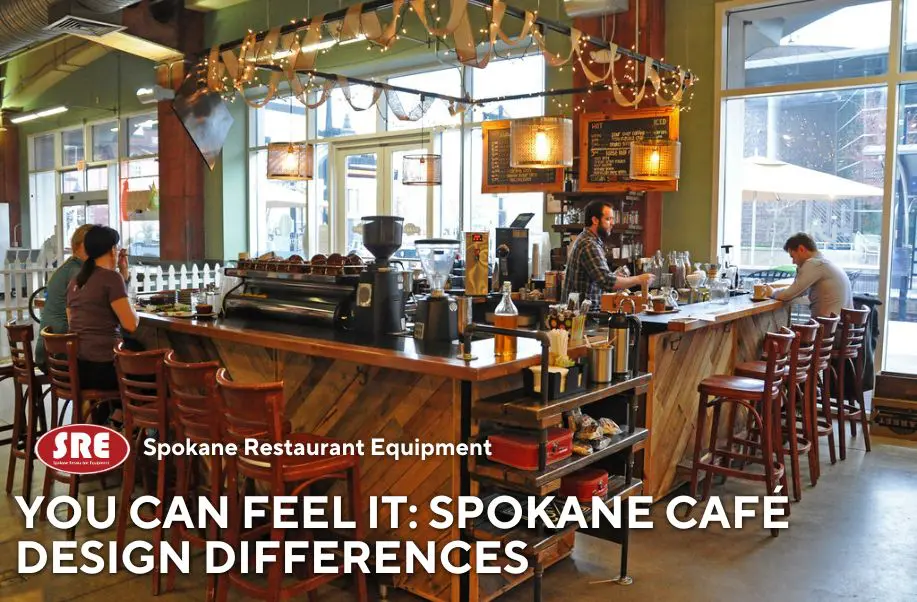
This is the rhythm of a Spokane café during a morning rush, warm, welcoming, and intentional. The kind of space where people don’t just grab coffee and leave, but settle in, stay awhile, and come back again.
But behind that comfort is something far less visible: café layout design that either supports the operation or slowly works against it.
In real service conditions, small decisions matter more than anything else:
where a chair sits, how far a barista has to reach, how light moves through the room, and whether the space naturally guides people forward, or slows everything down.
Even from the service line, you can feel when a coffee shop layout isn’t working.
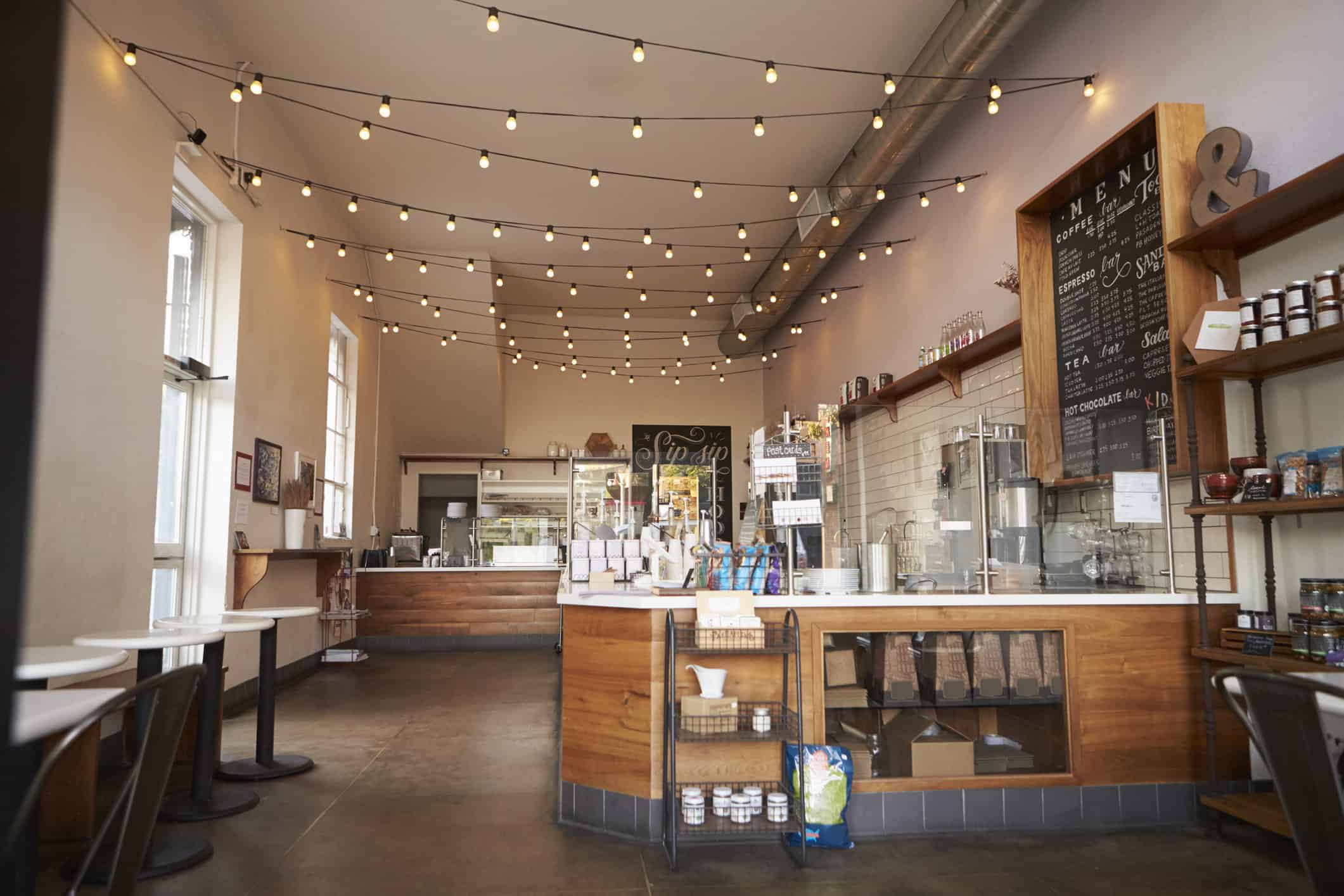
Why Café Layout Design Matters More Than Décor
A successful coffee shop isn’t built on aesthetics alone. It’s built on flow.
Good café layout design connects three things:
- Customer movement
- Staff efficiency
- Equipment placement
When those align, the space feels effortless, even during peak rush.
When they don’t, everything feels tighter, slower, and more stressful than it should.
For Spokane café operators, where volume can spike quickly in morning and lunch rushes, layout decisions directly impact:
- ticket times
- customer experience
- staff fatigue
- overall sales capacity
Seating: The Foundation of Coffee Shop Flow
In a well-planned coffee shop seating layout, movement feels natural from the moment someone walks in.
Customers order that step aside, and somehow there’s always space for the next person, without crowding or confusion.
Seating isn’t just furniture placement. It’s traffic engineering disguised as hospitality.
A strong café seating layout typically includes:
- Clear walkways from entrance to counter
- A balance of booths, tables, and quick-seat options
- Space separation between dine-in and mobile pickup traffic
- Comfortable spacing that avoids visual and physical congestion
Materials also matter. Warm wood tables, softened edges, and mixed textures (leather, fabric, wood) create a lived-in feel without sacrificing durability.
The goal is simple:
Customers should never feel “in the way” inside the space.
Lighting: Guiding Mood, Movement, and Comfort
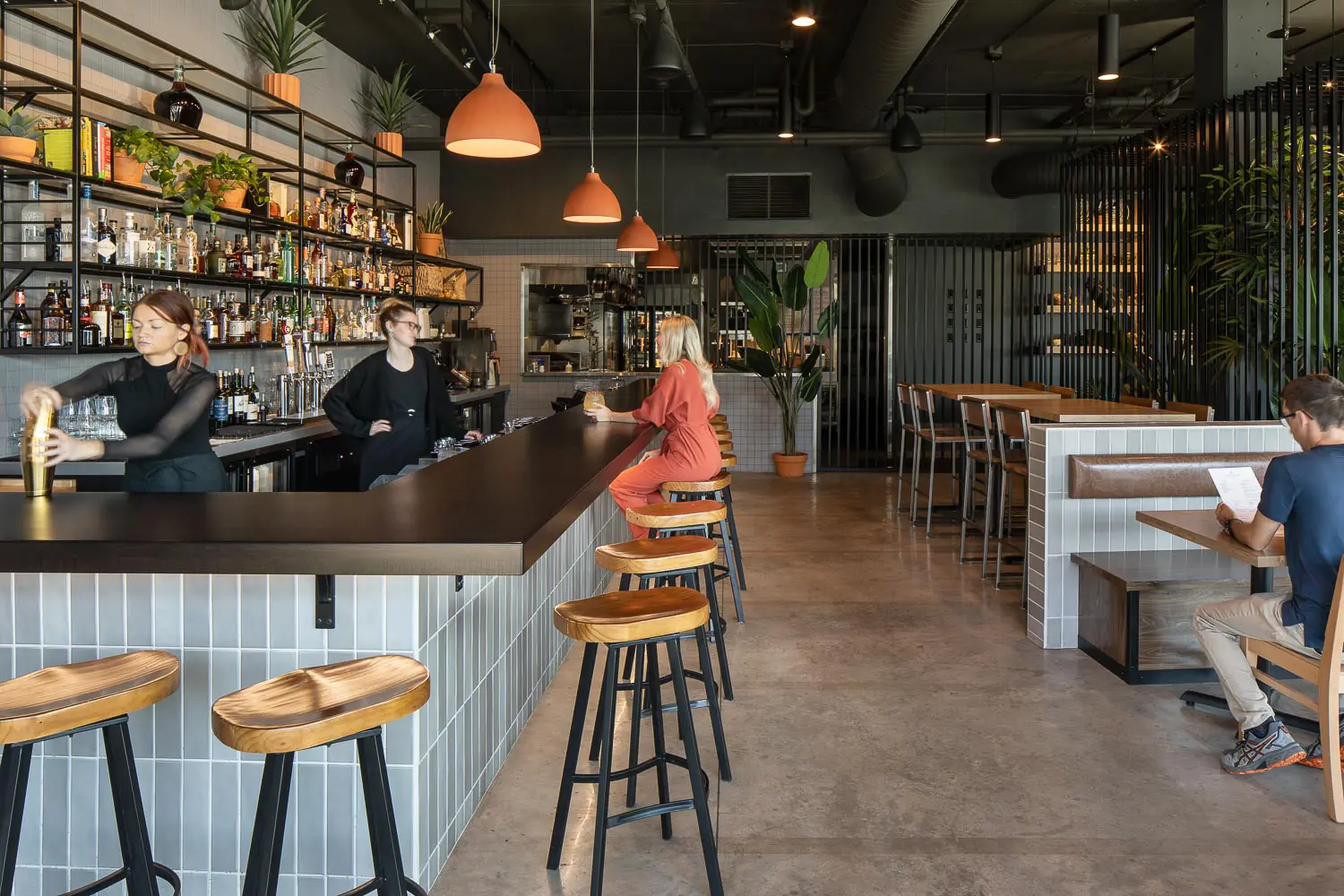
Lighting is one of the most underestimated parts of café interior design.
In strong café lighting design:
- Natural light draws people in
- Brighter zones guide movement and ordering
- Softer lighting supports seating and lingering
This balance creates subconscious structure. Customers naturally understand where to go, where to wait, and where to stay.
In Spokane café environments, where seasons dramatically change daylight quality, lighting design also supports:
- consistency year-round
- warmth during darker months
- visibility during peak morning rushes
Good lighting doesn’t just make a café look better.
It makes it easier to operate.

Equipment & Workflow: Designing for Efficiency
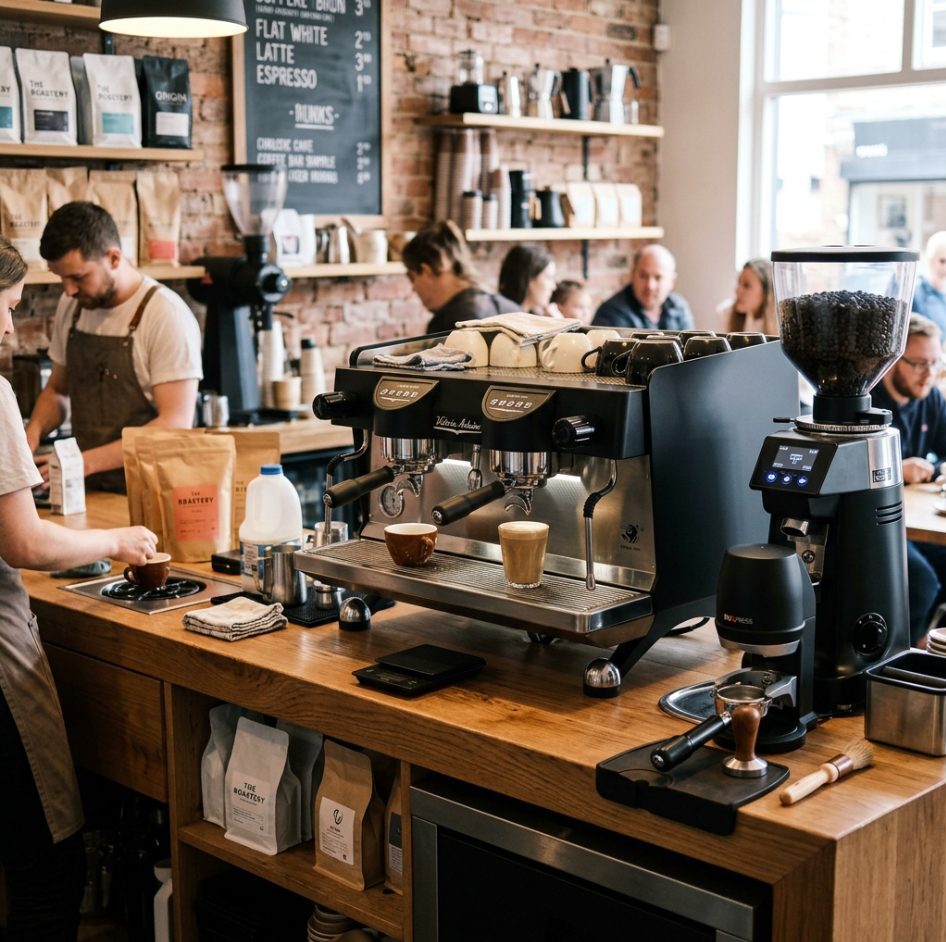
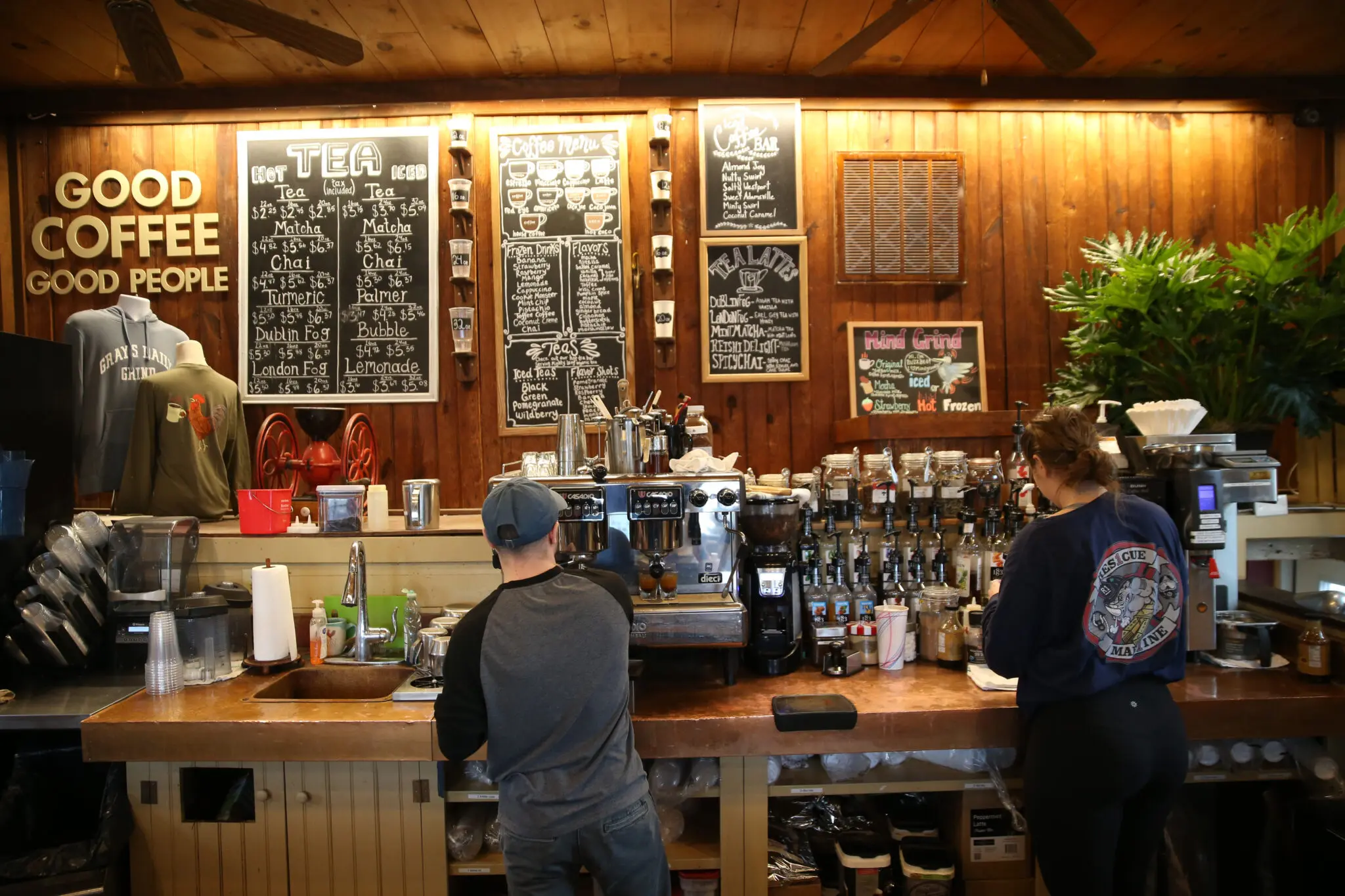
Behind the counter, every tabletop detail supports barista workflow efficiency.
Every decision in a well-designed café equipment layout supports one goal: reduce unnecessary movement.
When workflow is efficient:
- baristas don’t cross paths unnecessarily
- reach distance between tools is minimized
- espresso, grinders, and prep zones are logically grouped
- pickup and drink assembly stay clean and uninterrupted
Mugs stack where they’re needed. Cups are positioned for speed. Equipment placement supports natural handoffs instead of forcing extra steps.
This is where design turns into performance.
A well-structured café workflow improves:
- speed of service
- consistency of drinks
- staff stress levels
- peak-hour capacity
This is where design meets real commercial output.
Café Flow: How Everything Comes Together
Café flow isn’t a single design choice; it’s the result of everything working together.
It starts long before opening day:
- seating layout planning
- lighting strategy
- equipment placement
- service path design
- storage and prep organization
In strong coffee shop layout design, every element supports the next.
Customers move intuitively. Staff operate efficiently. The space absorbs rushes instead of breaking under them.
That’s the difference between a café that simply looks good, and one that performs under pressure.
Designing Cafés in Spokane That Actually Work
For Spokane operators, café design isn’t just about aesthetics, it’s about building a space that can handle real volume, real staff, and real service conditions.
That’s where working with experienced foodservice design and equipment professionals matters.
From layout planning to equipment selection and installation, Spokane Restaurant Equipment helps cafés build spaces designed for real operational flow, not just appearance.