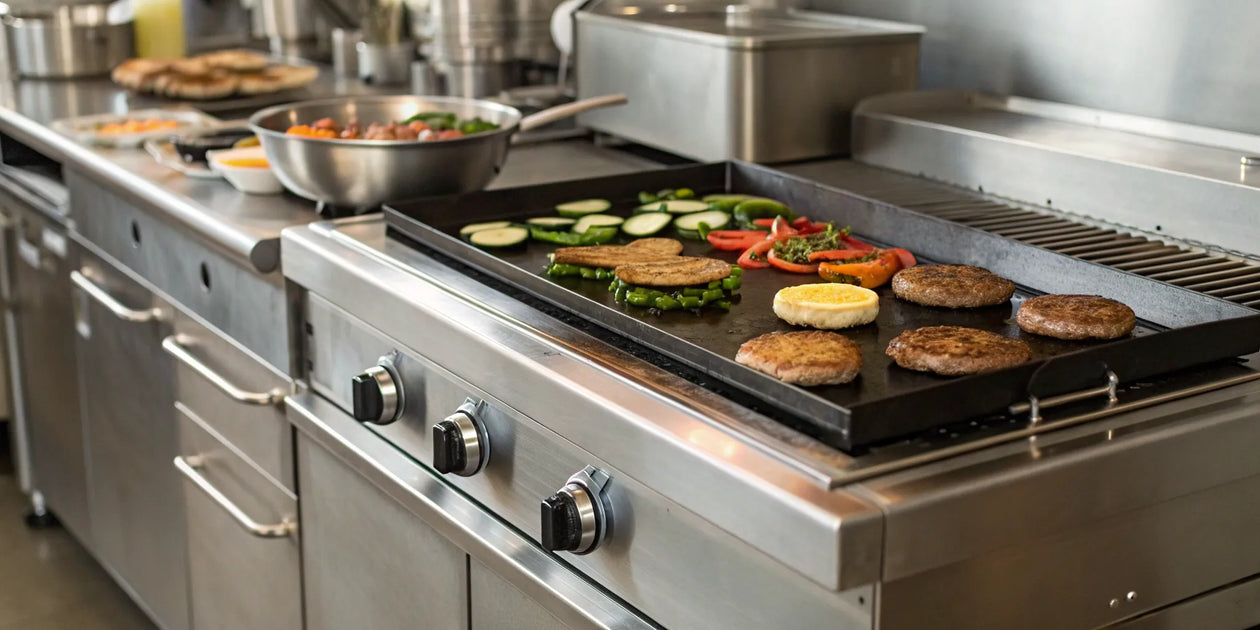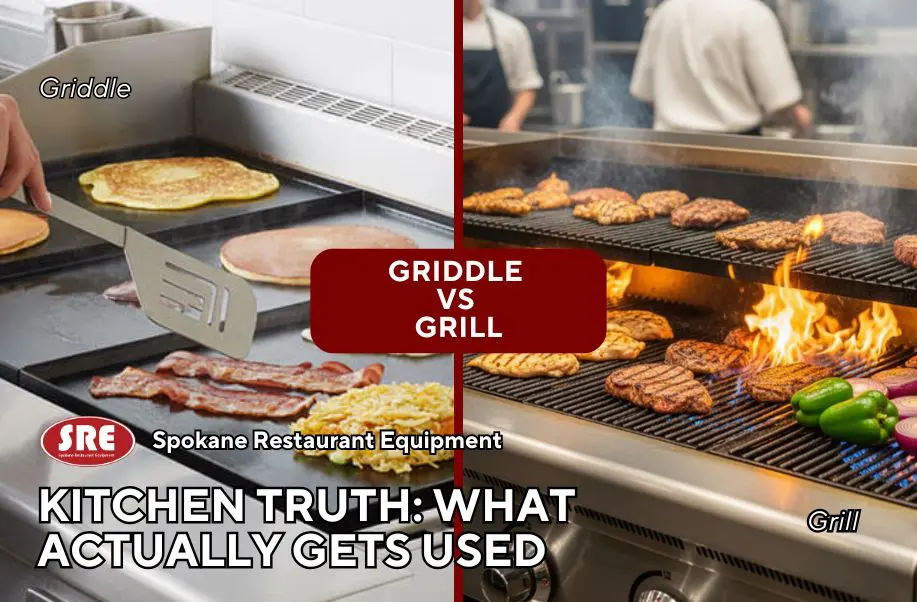
When comparing a commercial griddle vs grill, the key difference comes down to cooking surface, performance, and the type of food each is best suited for. Griddles are built for speed, consistency, and high-volume production, while grills (charbroilers) are designed for flame flavor, searing, and visual presentation.
Choosing between the two isn’t about which is better overall, it’s about which equipment matches your menu, workflow, and peak-hour demand.
What Restaurants Use Griddles For
A commercial griddle is one of the most versatile pieces of equipment in a professional kitchen. It can support breakfast, lunch, and dinner service from a single station, making it a core tool in high-volume operations.
Operators rely on griddles because they deliver fast production, even heat distribution, and consistent results during peak service. Unlike open-flame cooking, food makes direct contact with a flat steel surface, which allows for controlled, repeatable cooking across large batches.
In simple terms, a commercial griddle is a heavy-duty flat-top designed for continuous restaurant use.

Common Menu Items Cooked on a Griddle
- Eggs and breakfast platters
- Pancakes and hash browns
- Smash burgers
- Cheesesteaks
- Quesadillas
- Fried rice
- Grilled sandwiches
- Vegetables
Why Operators Choose Gas Griddles
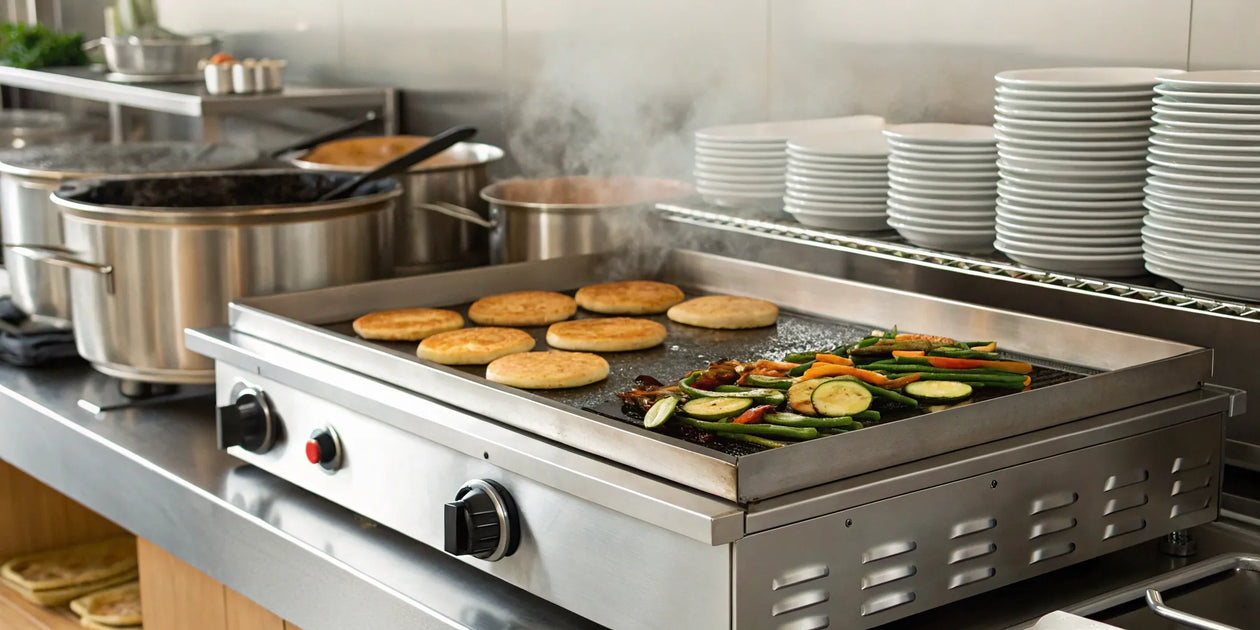
Gas griddles are widely used in commercial kitchens because of their responsiveness and heat recovery. During busy service periods, speed and consistency matter, and gas provides both.
Burners adjust quickly, allowing cooks to increase or reduce temperature almost instantly. This responsiveness becomes critical when cold food is constantly hitting the surface during a rush.
Strong heat recovery ensures the cooking surface stays consistent, even under heavy load. This is one of the main reasons gas griddles are preferred in high-volume kitchens, especially in burger restaurants, diners, and fast-casual concepts.
However, griddles do not produce grill marks or smoky flavor, since they rely on direct surface contact rather than open flame.
What Restaurants Use Commercial Grills For
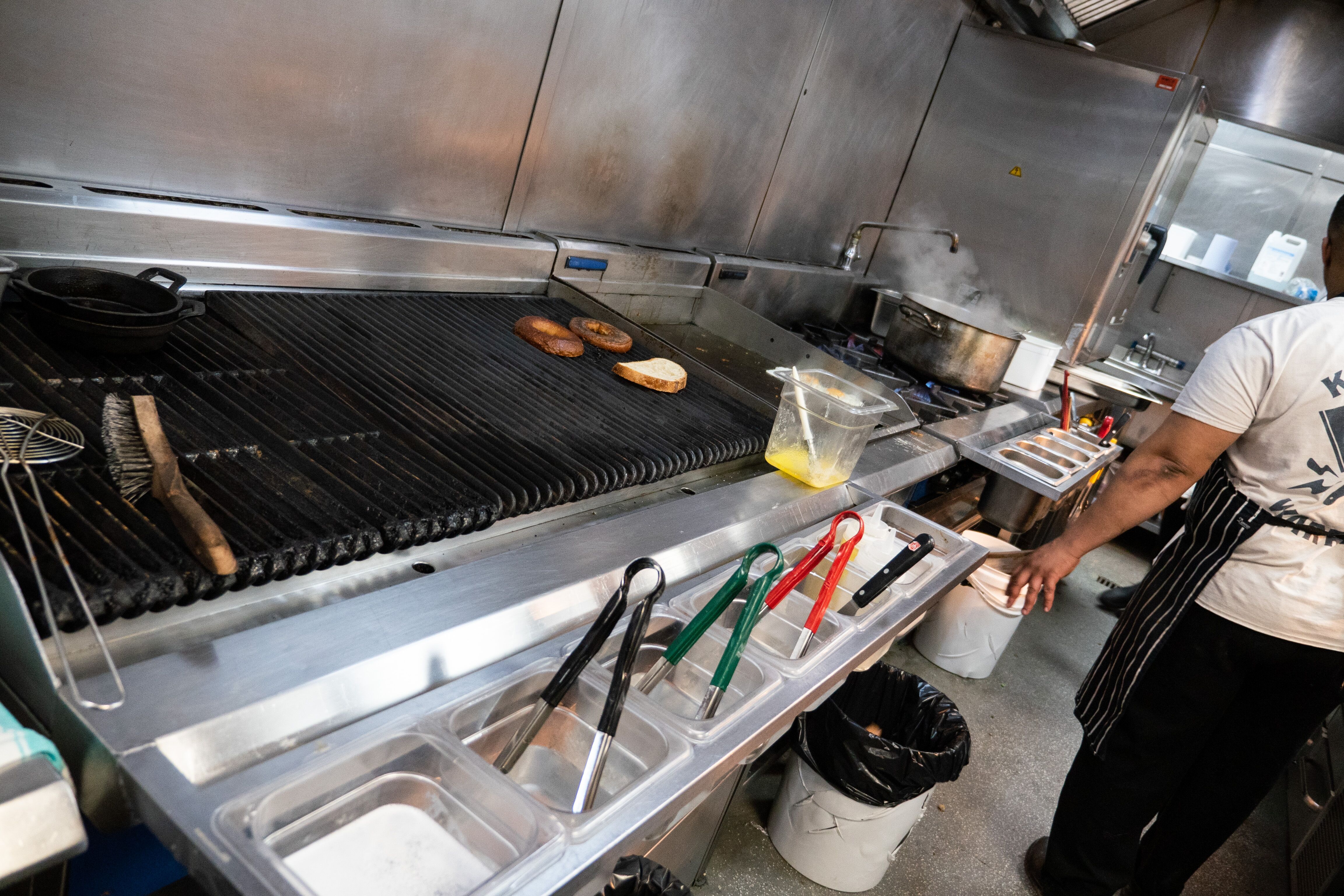
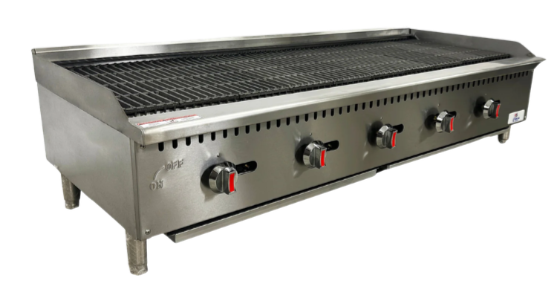
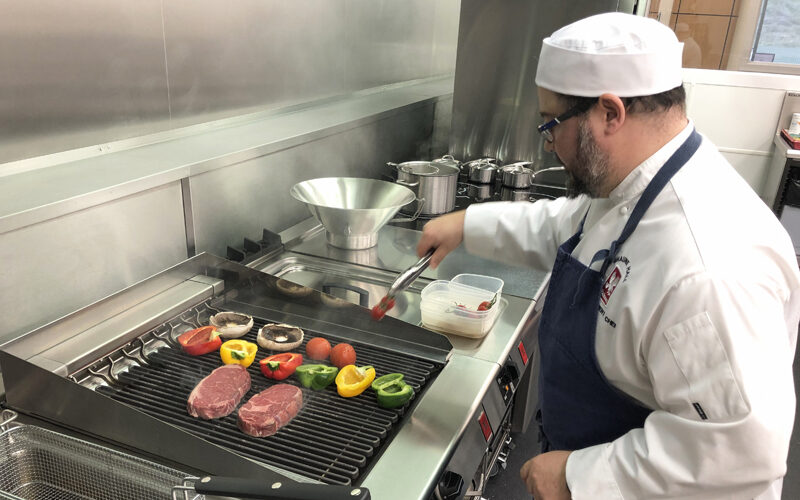
A commercial grill, commonly referred to as a charbroiler, cooks’ food over open grates using gas or charcoal heat sources. This creates the signature smoky flavor, char marks, and caramelization that many customers expect from grilled proteins.
Unlike griddles, grills allow fat and juices to drip away from the product, which enhances searing and flavor development. This makes them ideal for menus focused on grilled or flame-finished items.
Commercial grills are less about versatility and more about flavor execution and presentation.
Common Menu Items Cooked on a Grill
- Steaks
- Burgers
- Chicken breasts and thighs
- Seafood
- Kabobs
- Vegetables
- BBQ-style proteins
- Hot dogs
The Reality: Most High-Performing Kitchens Use Both
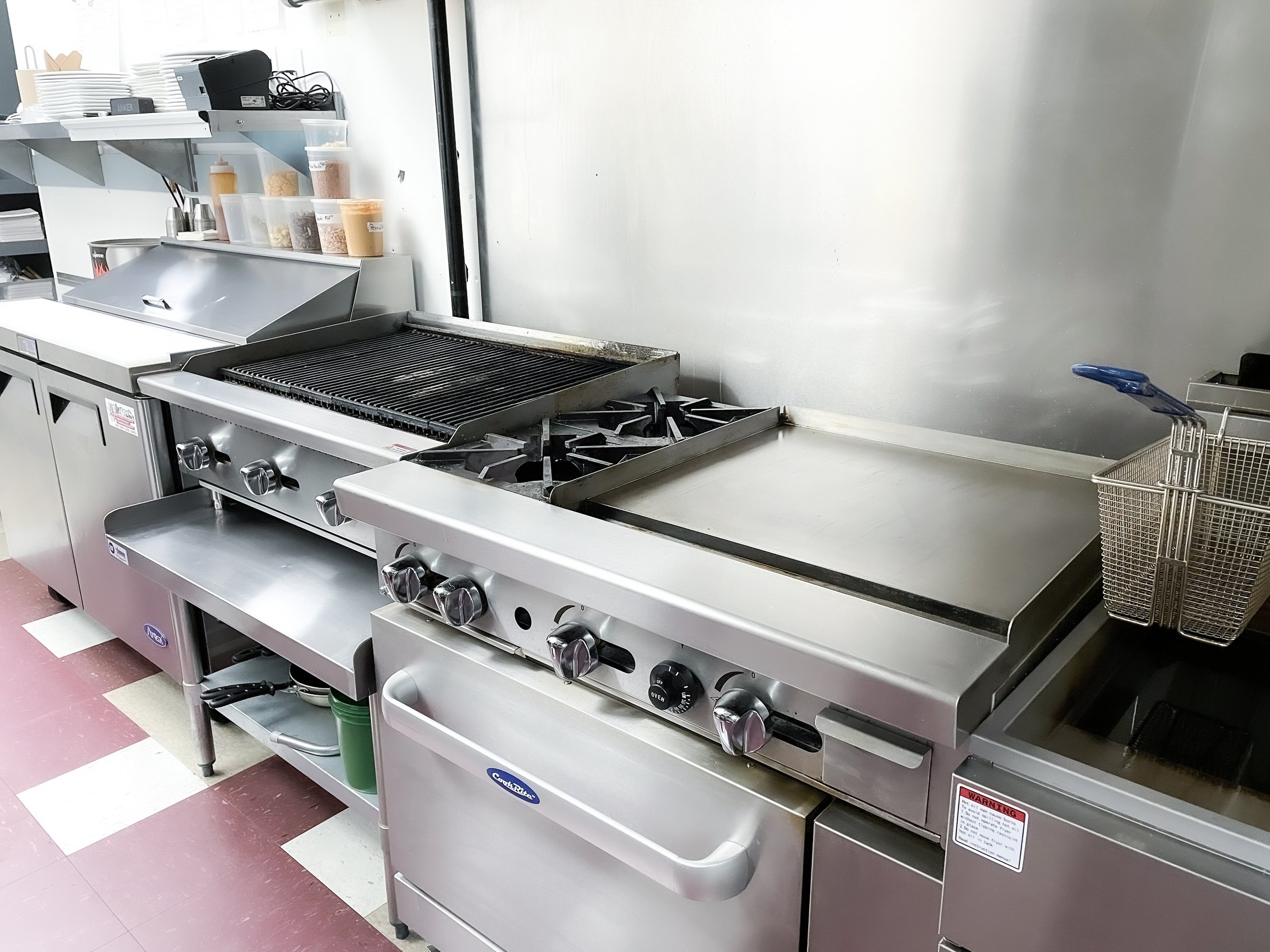
In modern commercial kitchen design, it is common for operators to use both a griddle and a grill. Each serves a different role on the line.
Typical Setup in Busy Kitchens:
- Griddle = speed and volume production
- Grill = flavor and finishing proteins
Common Combined Workflow:
- Smash burgers cooked on the griddle for speed
- Steaks or chicken finished on the charbroiler for flavor and presentation
This combination improves workflow efficiency, reduces bottlenecks, and allows for a broader menu without slowing down service.
If You Can Only Choose One
Choose a Commercial Griddle if:
- You need maximum versatility
- You operate breakfast or all-day service
- You run a high-volume burger concept
- You have limited kitchen space
Choose a Commercial Grill if:
- Flavor and presentation are essential
- Your menu is protein-focused
- You sell steaks, chicken, or grilled items
- You want a signature flame-cooked profile
Operator Insight: What Actually Gets Used Most
In many commercial kitchens, the griddle ends up being the most frequently used cooking surface due to its versatility and speed. It can handle a wide range of menu items and maintain consistency during peak service hours.
The grill remains essential, but more specialized used primarily when flavor, char, and presentation are required.
Ultimately, the right decision depends on menu structure, kitchen layout, and peak-hour demand. Equipment selection directly impacts speed, consistency, labor efficiency, and overall service performance.
In a commercial kitchen, the right equipment doesn’t just cook food, it determines how efficiently the entire operation runs.